
Making Tax Digital · Sole traders
Hairdressers and barbers: chair rental, styling products, and mobile takings under MTD
ONLY£15A MONTHLearn how to record chair rental, styling products, card fees, mobile appointments and gross income for Making Tax Digital as a sole trader.
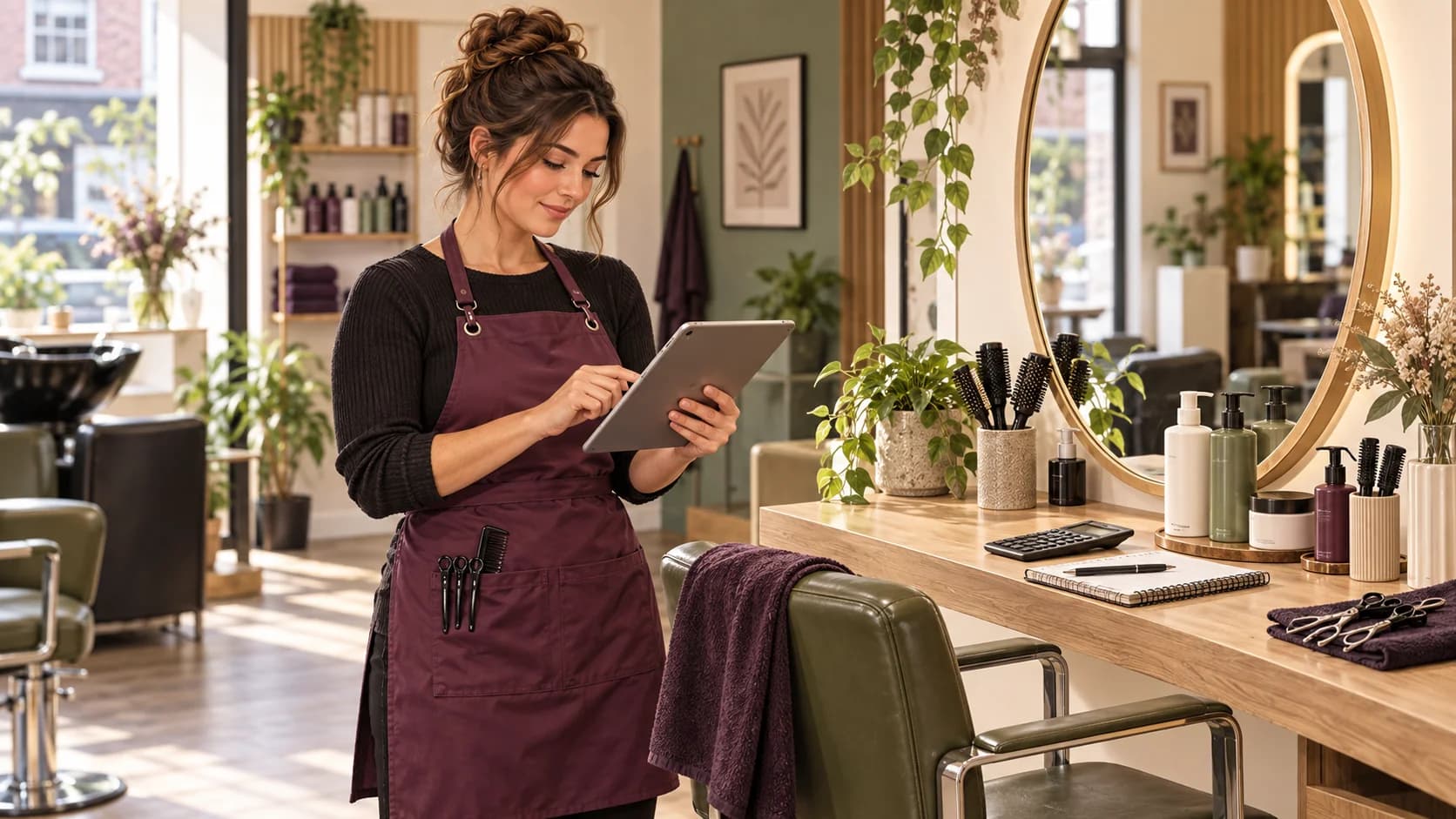
Chair rent can leave your account as a weekly fixed fee or a percentage deducted before the salon pays you. Products may be your own, included in rent or supplied under another arrangement. Those details determine how the accounts should look.
For a self-employed hairdresser or barber, Making Tax Digital works best when the contract and the payment records tell the same story. Start by establishing whose customers and earnings are involved, then record the related costs accurately.
When Making Tax Digital applies
Making Tax Digital for Income Tax changes how qualifying sole traders and landlords keep records and report income. Under HMRC’s timetable, the starting points are:
- From 6 April 2026, if qualifying income exceeded £50,000 in 2024–25.
- From 6 April 2027, if qualifying income exceeded £30,000 in 2025–26.
- From 6 April 2028, if qualifying income exceeded £20,000 in 2026–27.
Qualifying income generally means gross self-employment and property income combined, before expenses. Salary, pension income and dividends do not count towards this particular test. Check HMRC’s qualifying income guidance, including the treatment of VAT and shorter accounting periods where relevant.
The test uses the relevant earlier tax year; passing a figure during a busy month does not mean you join that day. Exemptions can apply. These rules concern your individual business and property income, rather than a limited company’s Corporation Tax reporting.
Check the working arrangement first
Calling a payment “chair rent” does not, by itself, establish self-employment. The actual relationship matters, including how the work is organised and what the contract requires. GOV.UK’s employment status guidance explains the distinction and the need to assess tax status properly.
For someone genuinely trading independently, the customer fees may be their own turnover, with chair rent as an expense. If a salon provides the service to its customers and pays you under a different arrangement, identify your own contractual earnings rather than automatically treating the salon’s full price as your sale.
Keep the chair agreement and a clear record of what is included: workspace, utilities, reception, products, towels or card processing. That avoids claiming costs you have not separately incurred.
Fixed rent and percentage rent
Business chair rental charges can be allowable where incurred for the trade. Under section 34 of the Income Tax (Trading and Other Income) Act 2005, the expenditure needs a business purpose. HMRC’s guidance explains the general test.
If a salon collects your customer fees as agent and retains rent, record the gross fees and the rental expense separately. Keep the settlement statement. The net transfer does not show the whole transaction.
Worked example: rent deducted from takings
Ella is a non-VAT-registered sole trader using the cash basis. She contracts with her own customers, and the salon collects £1,500 of her fees as agent. It retains 30% chair rent under their agreement and pays her the balance.
| Item | Amount |
|---|---|
| Gross customer income | £1,500 |
| Chair rent at 30% | £450 |
| Amount transferred to Ella | £1,050 |
| Separate products paid for | £180 |
| Contribution before other costs | £870 |
Ella’s income is £1,500, not £1,050 or £870. The example assumes no additional card fees or VAT complications. A different agreement could produce different records.
Products, tools and sharpening
Colour, bleach, foils, shampoo and other supplies bought for customer services can be allowable business costs. Keep purchase invoices and identify any products taken for personal use.
Clippers, dryers, scissors and other equipment may qualify for relief. Under the cash basis, most eligible equipment is deducted when paid for. Traditional accounting normally uses capital allowances for lasting equipment purchases. Sharpening and ordinary repairs should remain identifiable as maintenance costs.
If you sell retail products, include those customer receipts in turnover and record the stock purchases. A product supplied at cost is still normally part of your sales where you bought and sold it in your own name. HMRC’s materials and stock guidance explains the categories.
Protective gloves and qualifying workwear can be allowable, but ordinary clothes generally are not. Looking presentable for clients does not make everyday clothing a business deduction.
Mobile visits and home appointments
For mobile work, retain qualifying journey records and evidence of business parking or public transport. An eligible vehicle may use simplified mileage or actual costs, subject to previous claims and private use. Do not claim fuel and repairs again where mileage already covers them.
Travel between clients can be business travel, while ordinary travel to a regular salon needs separate assessment. For home appointments, support a reasonable business share of eligible household costs rather than claiming whole household bills automatically.
Relevant existing-trade courses and business insurance may also be allowable. Keep the course details and policy invoices, especially where a package includes several services or there is a personal element.
Reconcile cash, cards and advance payments
Record cash fees when received, including customer tips that belong to your business. Do not count the same cash again when banked. For card payments, reconcile gross takings, processor charges and the settlement amount.
Under the cash basis, ordinary advance booking payments generally count on receipt. Keep cancellations and refunds linked to the booking. Avona AI can support categorisation, while the chair agreement and settlement records explain any deductions before payment.
A manageable quarterly routine
For a business using standard tax-year periods, the 2026–27 quarterly update deadlines are 7 August 2026, 7 November 2026, 7 February 2027 and 7 May 2027. Updates are cumulative: each covers the tax year so far. Calendar update periods are also available, with the same deadlines.
Keep digital income and expense records, reconcile them regularly and send the required totals through compatible software. The Income Tax (Digital Obligations) Regulations 2026 underpin the requirements; HMRC’s digital record-keeping notice explains the applicable directions. A bank feed needs supporting detail wherever a payment conceals fees, private purchases or several transactions.
Normally, record the transaction date, amount and relevant category, retaining supporting invoices or receipts. HMRC’s digital records guidance explains permitted simplifications and digital links where more than one software product is used.
Quarterly updates do not replace the annual tax return. The 2026–27 return is due by 31 January 2028, and normal tax payment dates continue. HMRC is not applying late quarterly update penalties for 2026–27, but digital records and updates are still required. That first-year approach does not waive other filing or payment obligations.
Keep the records ready for the next appointment
Clear income and rental costs make quarterly reporting easier to manage. Avona.app costs £15/month for self-service use. Avona Concierge, managed by chartered accountants, starts from £60/month if you would prefer ongoing help with your accounts.