
Making Tax Digital · Sole traders
Domestic appliance repairers: parts stock, diagnostic tools, and van expenses under MTD
ONLY£15A MONTHA guide to appliance repair parts, diagnostic tools, van finance, customer recharges and quarterly Making Tax Digital bookkeeping.
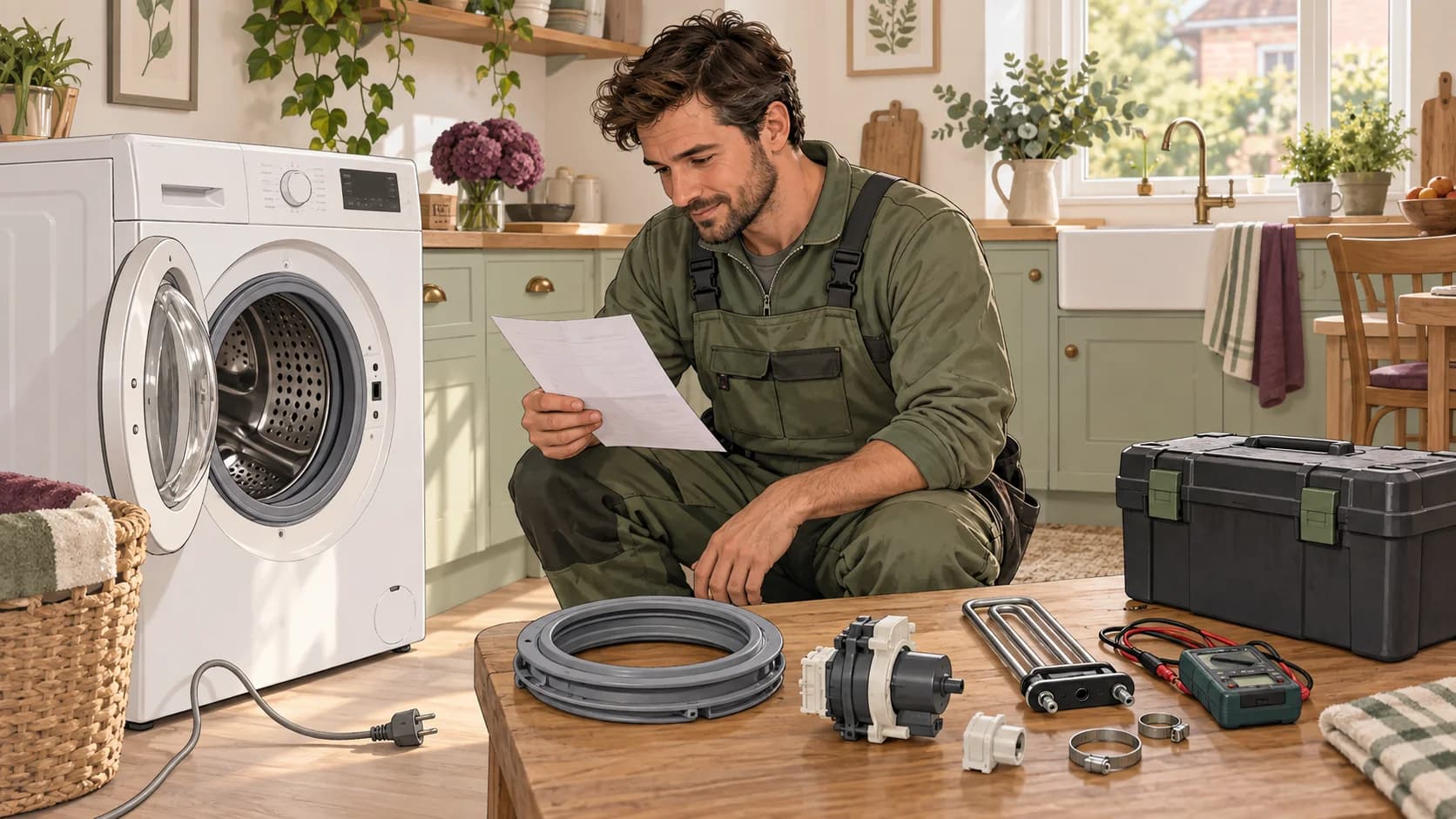
A replacement pump supplied at cost still passes through your business. So does the diagnostic fee, even when a customer pays both in one card transaction. The margin on a repair and the turnover reported to HMRC are different figures.
For mobile appliance repairers, Making Tax Digital is an opportunity to connect parts purchases, customer jobs and payments consistently. It also helps prevent common duplicate claims when a trade account, finance agreement or card settlement produces several records for one transaction.
When Making Tax Digital applies
Making Tax Digital for Income Tax changes how qualifying sole traders and landlords keep records and report income. Under HMRC’s timetable, the starting points are:
- From 6 April 2026, if qualifying income exceeded £50,000 in 2024–25.
- From 6 April 2027, if qualifying income exceeded £30,000 in 2025–26.
- From 6 April 2028, if qualifying income exceeded £20,000 in 2026–27.
Qualifying income generally means gross self-employment and property income combined, before expenses. Salary, pension income and dividends do not count towards this particular test. Check HMRC’s qualifying income guidance, including the treatment of VAT and shorter accounting periods where relevant.
The test uses the relevant earlier tax year; passing a figure during a busy month does not mean you join that day. Exemptions can apply. These rules concern your individual business and property income, rather than a limited company’s Corporation Tax reporting.
Parts supplied at cost still count
If you buy a heating element, drum bearing, drain pump, oven motor or door seal and supply it to your customer, the amount charged normally forms part of your income. Record the component purchase separately. Charging no mark-up does not turn your own purchase into the customer’s direct expense.
Where a customer orders and pays for their own part, your income may instead be just the diagnostic and fitting charge. Keep the invoice and job description clear about who supplied what.
HMRC’s materials and stock guidance explains the general expense categories. Under the cash basis, eligible stock purchases generally follow payment timing; traditional accounting also considers stock on hand and matching costs to the accounts.
Supplier accounts, warranty jobs and credits
A trade account statement is useful for reconciliation, but the underlying invoices identify the parts. Avoid claiming an invoice and the later payment clearing that same invoice as two separate expenses.
Keep credit notes for faulty or returned components. If a supplier exchanges a faulty pump without charging again, there is no additional purchase merely because another unit is delivered. Core deposits and refundable charges also need separating from final component costs.
For manufacturer warranty work, establish your own contractual earnings from the remittance statement. The manufacturer’s retail appliance value is not your turnover. Record any parts you genuinely buy and any charges withheld from your own fee, with supporting detail.
Diagnostic equipment and subscriptions
Multimeters, suitable testing units, specialist hand tools and business service-manual subscriptions can be allowable. Section 34 of the Income Tax (Trading and Other Income) Act 2005 requires a business purpose; HMRC’s guidance explains the private-use restriction.
Most eligible equipment is deducted when paid for under the cash basis. Under traditional accounting, capital allowances may apply instead. Routine calibration, repairs and ongoing software access should be separately identifiable from the original equipment purchase.
Keep training records where a course develops the existing repair business. The tax treatment of a cost does not establish permission to undertake a regulated type of work; any required competence and registration must be assessed separately.
Van finance, shelving and disposal
Retain the van purchase or lease agreement and itemised invoices for shelving and other equipment. A loan payment may contain principal and interest, while a genuine rental charge follows a different arrangement. Loan capital is not an additional deduction for an asset already claimed.
For an eligible vehicle, simplified mileage replaces the covered purchase and running costs. It cannot be combined with separate deductions for those same items, and previous vehicle claims can prevent using it. Actual costs require the appropriate business-use allocation.
Keep records for business waste collection or disposal of removed components. In England, check the waste carrier registration rules for your activities. Other UK nations have separate arrangements. Any receipts from selling business scrap also need considering as business income.
Worked example: a pump replacement
Meena uses the cash basis and is not VAT registered. She buys a pump for £85 and charges the customer £85 for the part plus £95 for diagnosis and fitting. The card provider deducts £3.60.
| Item | Amount |
|---|---|
| Gross customer income | £180.00 |
| Pump cost | £85.00 |
| Card fee | £3.60 |
| Contribution before other costs | £91.40 |
The bank settlement is £176.40. Neither that settlement nor the £91.40 contribution replaces the £180 turnover figure. The example assumes the part is paid for and the customer payment is received within the same reporting period.
If Meena later refunds the customer, she records the repayment and any supplier recovery with the original job reference. That keeps the customer account, parts cost and profit calculation connected.
Review jobs while the details are familiar
Reconcile emergency callout payments against job records, including cash. Mark unpaid invoices for collection and separate private transfers from trade receipts. Avona AI can support categorisation, but supplier documents remain necessary where a merchant order contains parts, tools and personal items together.
A manageable quarterly routine
For a business using standard tax-year periods, the 2026–27 quarterly update deadlines are 7 August 2026, 7 November 2026, 7 February 2027 and 7 May 2027. Updates are cumulative: each covers the tax year so far. Calendar update periods are also available, with the same deadlines.
Keep digital income and expense records, reconcile them regularly and send the required totals through compatible software. The Income Tax (Digital Obligations) Regulations 2026 underpin the requirements; HMRC’s digital record-keeping notice explains the applicable directions. A bank feed needs supporting detail wherever a payment conceals fees, private purchases or several transactions.
Normally, record the transaction date, amount and relevant category, retaining supporting invoices or receipts. HMRC’s digital records guidance explains permitted simplifications and digital links where more than one software product is used.
Quarterly updates do not replace the annual tax return. The 2026–27 return is due by 31 January 2028, and normal tax payment dates continue. HMRC is not applying late quarterly update penalties for 2026–27, but digital records and updates are still required. That first-year approach does not waive other filing or payment obligations.
Make the records as clear as the repair invoice
Separating parts, labour, fees and vehicle funding provides a reliable basis for reporting. Explore Avona.app at £15/month, or Avona Concierge, managed by chartered accountants, starting from £60/month, for ongoing bookkeeping and tax support.