
Landlords
Allowable expenses for UK landlords: what you can (and can't) claim.
ONLY£15A MONTHA no-nonsense guide to rental running costs, repairs versus improvements, mortgage-interest relief, and keeping your expense records organised.
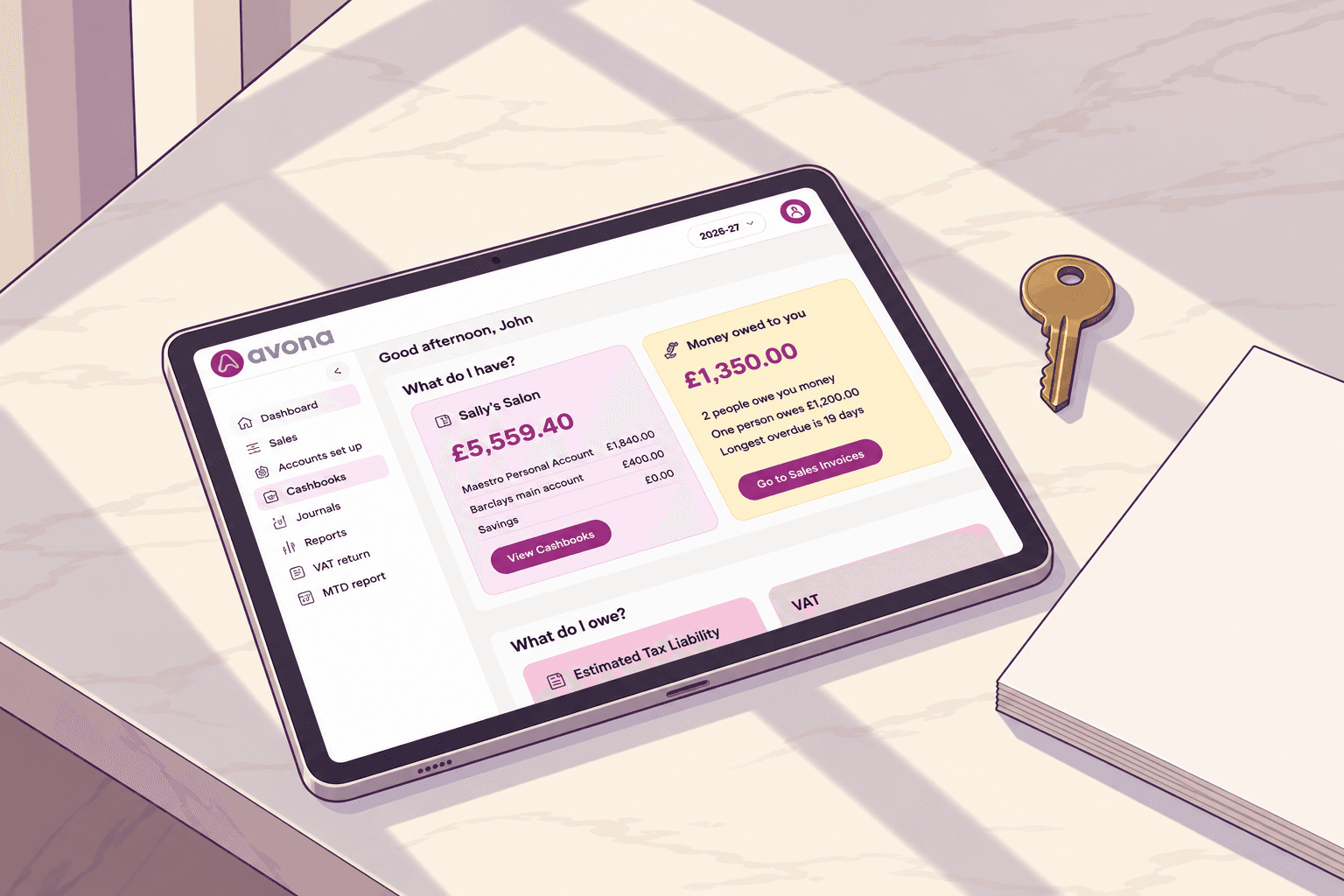
Running a rental property is a business, and like any business, it comes with a mountain of running costs. The good news is that HM Revenue & Customs (HMRC) allows you to deduct many of these day-to-day costs from your rental income, lowering your taxable profit and potentially your final tax bill.
The catch? Claiming the wrong things—or mixing up “repairs” with “improvements”—can leave you with an incorrect tax return and a bill to put right.
Making Tax Digital (MTD) for Income Tax started on 6 April 2026 for individuals with qualifying income over £50,000 in 2024–25, unless an exemption applies. Landlords within scope must keep digital records and send quarterly updates through compatible software. To help you get your records straight, here is the no-nonsense guide to what you can and cannot claim.
This guide focuses on individuals letting residential property. Companies and commercial lettings can have different rules.
The golden rule: “wholly and exclusively”.
Before you try to claim any receipt, it must pass HMRC’s primary test: the expense must be incurred wholly and exclusively for the purpose of renting out the property. Personal costs cannot be claimed.
If an expense has mixed usage—like a mobile phone you use for both personal calls and tenant issues—you can only claim an identifiable business proportion of that bill.
The yes list: what you can claim.
These are everyday revenue expenses that keep your property running. Where they meet the business-purpose test, you can generally deduct them from rental income:
- Repairs and maintenance: Fixing leaks, repainting between tenancies, treating damp, or replacing broken roof tiles are normally allowable repairs. Replacing a broken boiler with a modern equivalent can also be a repair, provided the work is not a wider capital improvement.
- Professional and agent fees: Letting-agent fees and accountancy costs for the rental business are generally allowable. Legal fees can qualify for lets of a year or less, or for renewing a lease for less than 50 years. Fees for buying the property are treated differently.
- Insurance premiums: Cover for your rental business, such as landlord liability, buildings, and contents insurance, is generally claimable.
- Council Tax and utilities: If you pay the gas, electricity, water, or Council Tax for the rental business—for example, during a genuine gap between tenancies or in a house in multiple occupation—you can generally claim those costs. If the tenant pays them directly, you cannot.
- Service charges and ground rent: The ground rent and routine service charges you pay for a leasehold rental can be allowable. Check any service-charge amounts funding capital improvements separately.
The no list: what you cannot claim as running costs.
The following costs cannot simply be deducted from rental income to lower your Income Tax bill:
- The full mortgage payment: The capital repayment portion is not an allowable expense. For individual residential landlords, mortgage interest and eligible finance costs generally receive a basic-rate tax reduction instead of a deduction from rental profits. For 2026–27, that rate is 20%, subject to limits based on eligible finance costs, property profits, and adjusted total income. It is not an automatic refund of 20% of every mortgage payment.
- Capital improvements: Adding a loft conversion or building an extension is capital expenditure, rather than a day-to-day repair. A substantial upgrade may also be capital, but using modern equivalent materials does not automatically turn a repair into an improvement. Keep the receipts: qualifying enhancement expenditure may reduce a future Capital Gains Tax bill, subject to the relevant conditions.
- Initial furnishings: The first bed, sofa, or washing machine bought to furnish a rental is not covered by replacement of domestic items relief. A later replacement may qualify when the old item is no longer available to tenants and the conditions are met. Relief is generally limited to the cost of an equivalent replacement, with adjustments for incidental costs and any proceeds from disposing of the old item.
If you use the property income allowance instead of claiming actual expenses, you cannot also deduct those expenses. Check which treatment applies before completing your return.
The easiest way to track it all.
Sorting through a year of bank statements to work out whether a B&Q receipt was for a repair or an improvement is a headache. For landlords within MTD, leaving everything until year end will not meet the quarterly reporting timetable. You can still review and categorise records yourself; compatible software is needed to keep and submit the required digital information.
Avona helps take the headache out of landlord expenses. Connecting your bank account can bring transactions into one place, ready for you to review and categorise.
Keep your receipts and invoices, add any costs not captured by the bank feed, and check uncertain items with your accountant. A bank transaction alone does not establish whether work was a repair or an improvement.
Explore Avona for property landlords to make tracking your property expenses simpler.